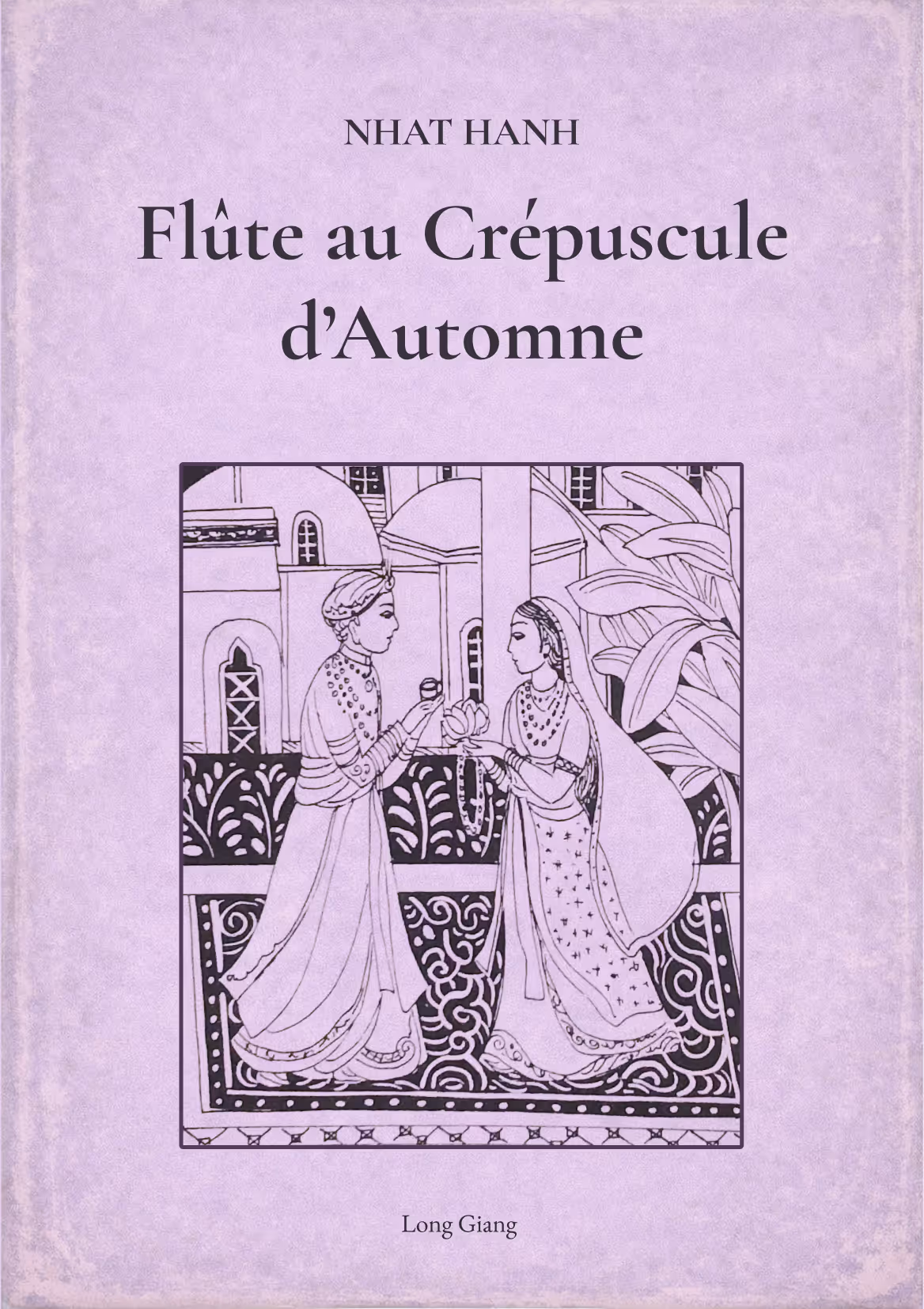
Flûte au Crépuscule d’Automne
Il s'agit de la première œuvre du jeune moine Nhat Hanh, publiée par la maison d'édition Long Giang à Saïgon en 1950. C'est une collection de poèmes, comprenant notamment un poème composé par l'auteur à l'âge de douze ans. Disparue pendant la guerre, l’œuvre originale a repris vie, presque dans son intégralité, grâce aux détails recueillis dans les récits ultérieurs de l'auteur.

Photographie de 1948‑1949, époque de composition de la plupart des poèmes de ce recueil.
L'auteur évoque les souvenirs de la naissance de son premier ouvrage.

La maison d'édition Long Giang de Saïgon a jadis imprimé Flûte au Crépuscule d’Automne.
Je me souviens de l’époque où je me rendais de la Pagode Hưng Đạo jusqu’à l’imprimerie pour corriger les épreuves avant l’impression. Nous y allions en calèche, appelée « xe thổ mộ ». Il n’y avait pas de bus à cette époque. Nous montions dans la calèche, levions les jambes et glissions nos sabots sur une barre. Cinq ou six personnes pouvaient s’asseoir ensemble. Au-dessus de nous il y avait des bâtons, des paniers, des cages à poulets, tous empilés bien haut. Le trajet coûtait un dông vietnamien par voyage : un à l’aller, un au retour.
Ce jour-là, j’étais parti pour une relecture d’épreuves alors que j’étais malade et fiévreux. J’avais faim. J’avais prévu de m’arrêter au restaurant végétarien Tín Nghĩa pour un bol de bouillie aux champignons. Je voulais y ajouter beaucoup de poivre pour qu’il soit bien chaud et me fasse transpirer, en espérant que cela me ferait du bien. J’avais cinq dôngs en poche. Après le travail, je me suis dit : si la bouillie coûte trois dôngs, il m’en restera un pour le retour en calèche. Alors, j’ai marché de l’imprimerie jusqu’au restaurant Tín Nghĩa.
A ce jour le restaurant Tín Nghĩa est toujours implanté à Hô Chi Minh-Ville. Si jamais vous y allez un jour, vous pouvez toujours y passer.
Ce jour-là, le bol de bouillie fut servi bien chaud. J’étais content rien que de voir la vapeur s’en échapper. Je pris le poivrier pour en saupoudrer un peu dessus. Pas de chance ! Les trous étaient sans doute bouchés et la personne précédente, n’ayant pas réussi à faire sortir le poivre en secouant, aurait ouvert le couvercle pour en verser. Après quoi, elle ne l’aurait pas bien revissé. Alors quand ce fut mon tour, en prenant le poivrier pour le secouer délicatement, le couvercle tomba dans mon bol, et la moitié du poivre aussi.
Avec autant de poivre, comment allais-je pouvoir manger la bouillie ? Je pris ma cuillère et tentai d’écoper le poivre, espérant sauver au moins les deux tiers du bol. Mais ma main tremblait et, au lieu de cela, je ne fis que remuer le poivre plus profondément. Je restai donc assis là, résignée. Le bol entier de bouillie aux champignons était perdu.
Si Sœur Trai Nghiêm avait été là, elle m’en aurait sûrement racheté un autre. Mais elle n’était pas encore née. Et ce bol de bouillie devint ainsi légendaire. Je suis reparti avec un dông en poche, juste assez pour rentrer en calèche à la pagode.
C’était vers 1950, et pourtant j’ai l’impression que c'était hier.
Bien des années plus tard [en 2008], lors de mon récent voyage au Vietnam pour la célébration internationale de Vesak organisée par les Nations Unies, j’ai trouvé le temps de retourner dans ce lieu. Quelle chance ! J’ai retrouvé le restaurant. Bien sûr, les anciens propriétaires n’étaient plus là, mais j’ai vu leurs enfants et petits-enfants, peut-être la troisième génération. La bouillie de champignons n’était plus à la carte. On y servait désormais des plats plus raffinés et plus chers. Il semble que peu de gens mangent encore de la bouillie de champignons.
Mais il se produisit une chose merveilleuse. La table où je choisis de m’asseoir était la même que celle où j’avais pris place autrefois ! J'ai soulevé la nappe en plastique. J’ai aperçu la vieille table en bois en dessous. Toutes les autres tables avaient été remplacées par des tables en plastique neuves. Seule celle-ci subsistait du passé. Je me suis assis à cette même table.
J’ai donc demandé à la propriétaire si je pouvais enlever la nappe et m’asseoir directement à la vieille table, pour toucher celle d’il y a soixante ans. Elle accepta gentiment. J’ai commandé un bol de bouillie aux champignons. Elle m’a expliqué qu’ils ne la préparaient plus, mais qu’en raison de la vieille histoire, elle serait heureuse d’aller m’en préparer en cuisine. Que ceux qui m’accompagnaient au restaurant Tín Nghĩa ce jour-là veuillent bien lever la main ! Elle prit une photo avec nous et refusa tout paiement, bien que nous soyons un grand groupe. Elle nous offrit le repas en cadeau.
Vous pouvez profiter de ce livre gratuitement, un cadeau de pleine conscience.
Si vous trouvez de la valeur dans les enseignements de Thích Nhảt Hạnh, pensez à faire un petit don. Quelques dollars suffisent à soutenir les moines du Village des Pruniers et les éditions La Bôi, afin qu'ils puissent continuer à préserver et à partager ces enseignements avec le monde entier.
Auteur
Thich Nhat Hanh
Editeur
Lá Bối
Publication
1949
Pages