
Lá Bối
Founded in 1964 by Thich Nhat Hanh and his Sangha, the Lá Bối publishing house aims to bring Engaged Buddhism into everyday life through more than 79 works in Vietnamese, now available in English.
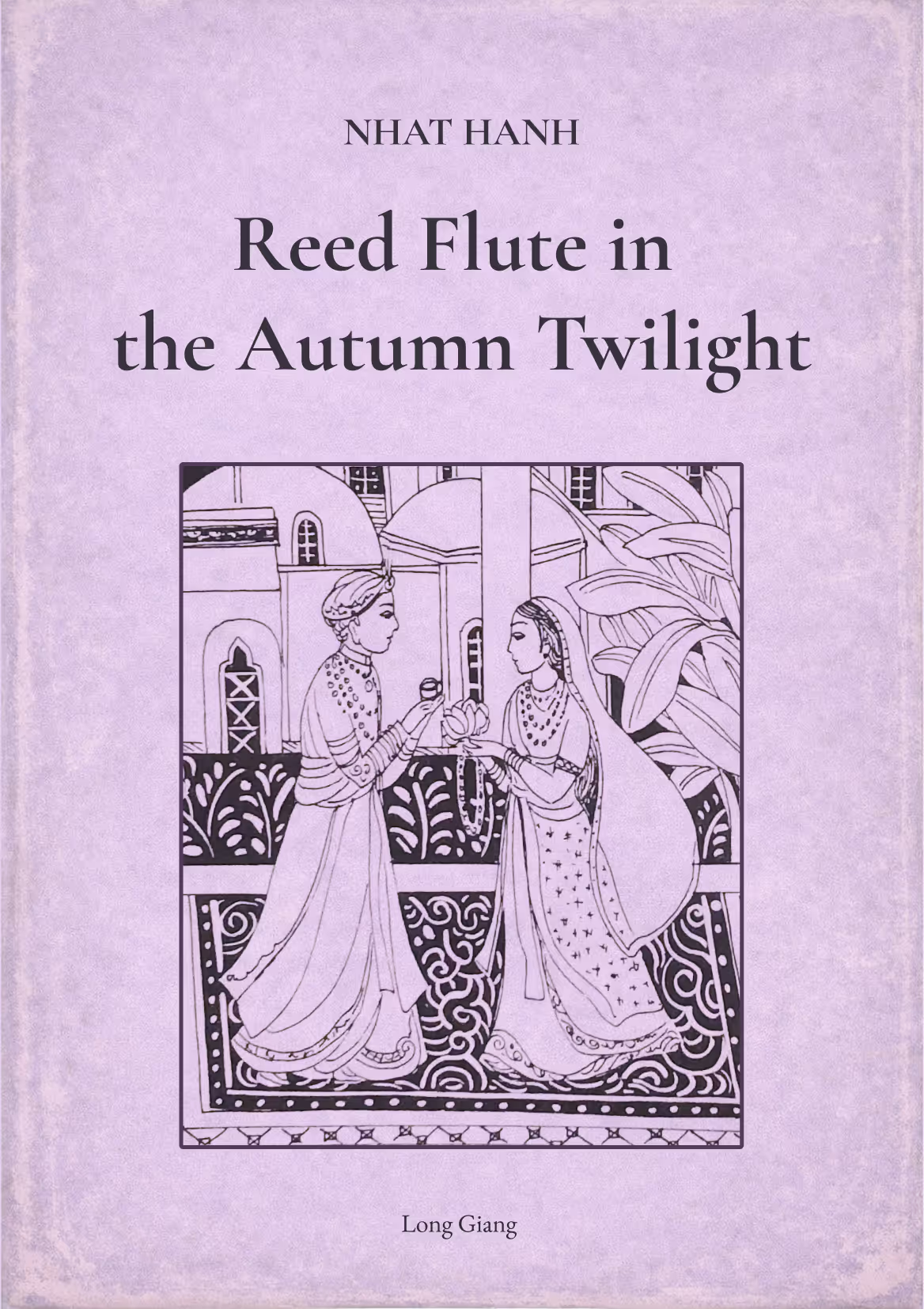
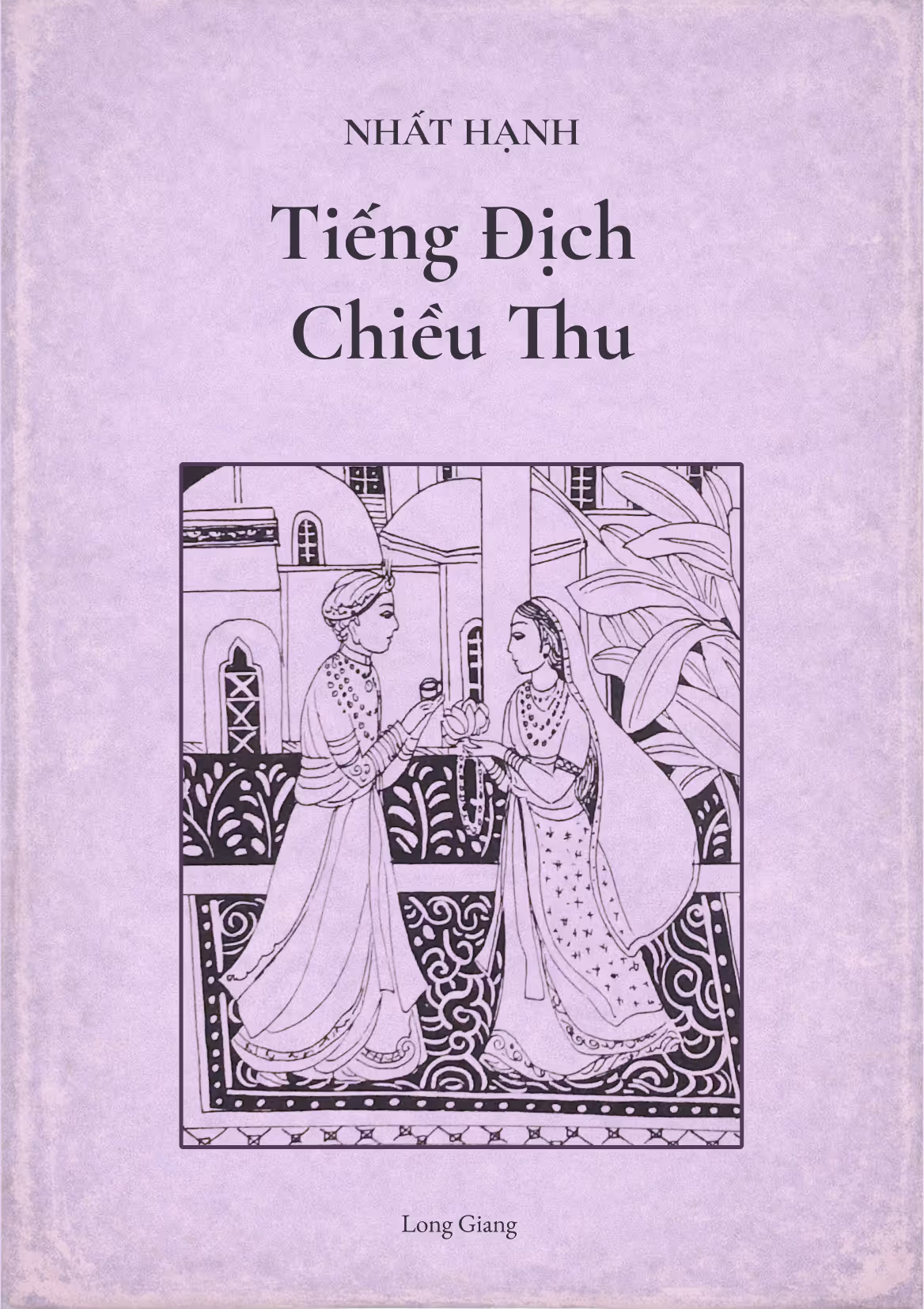
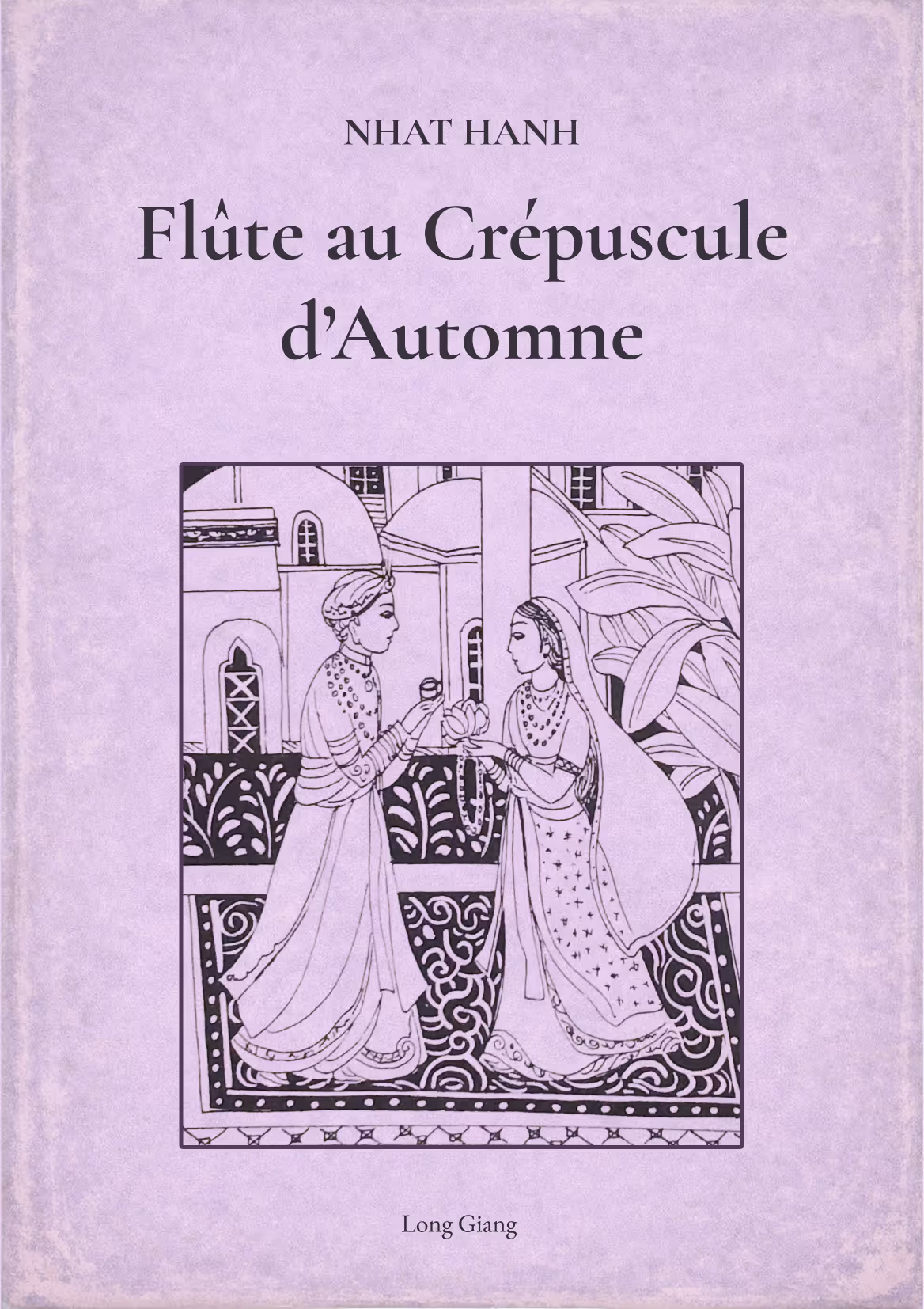
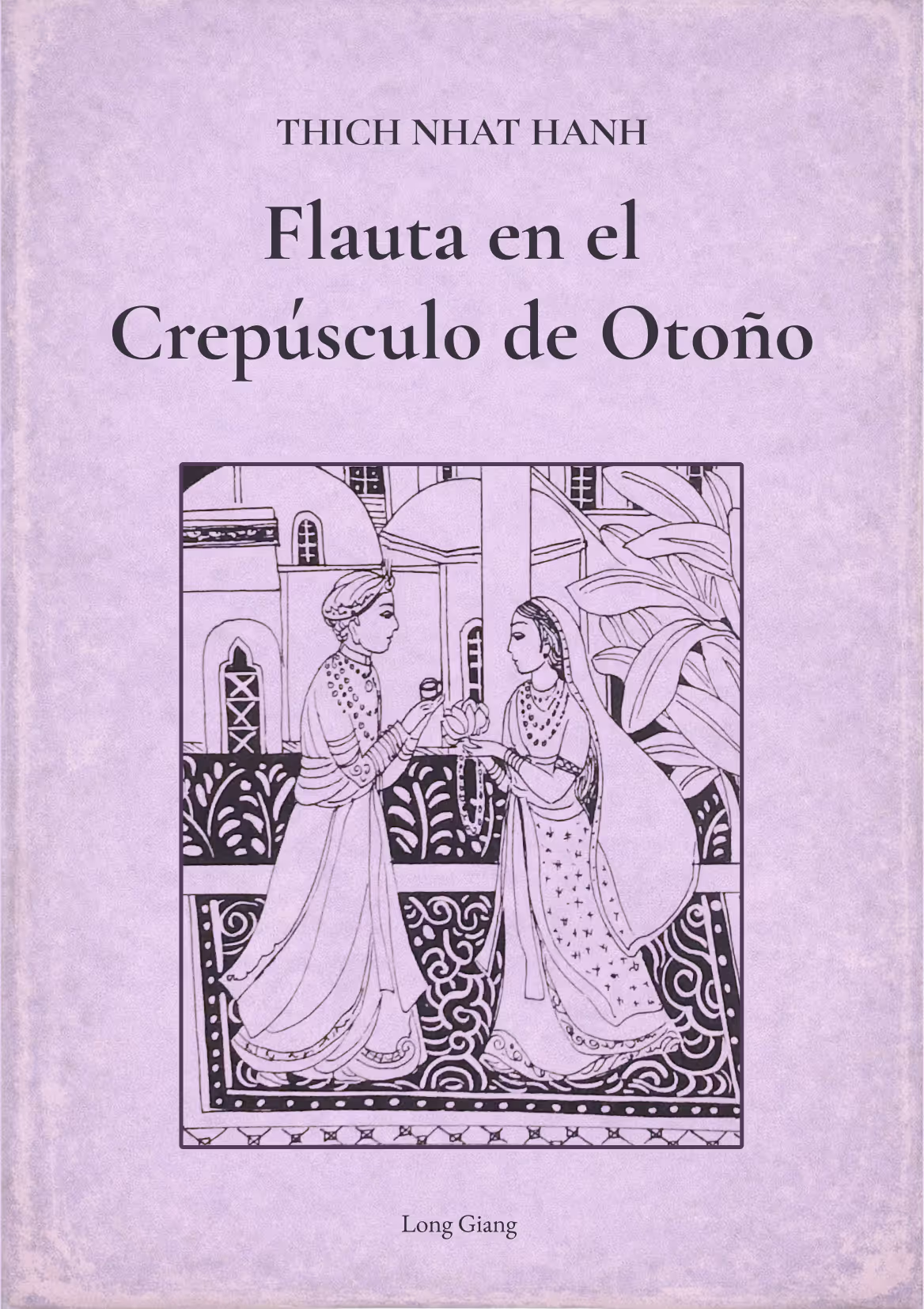


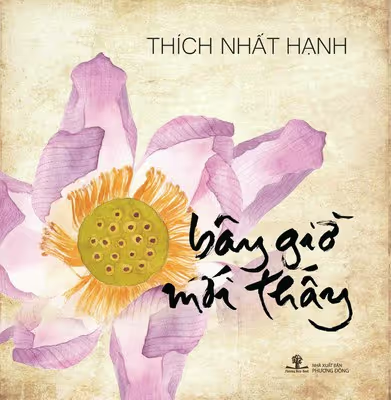
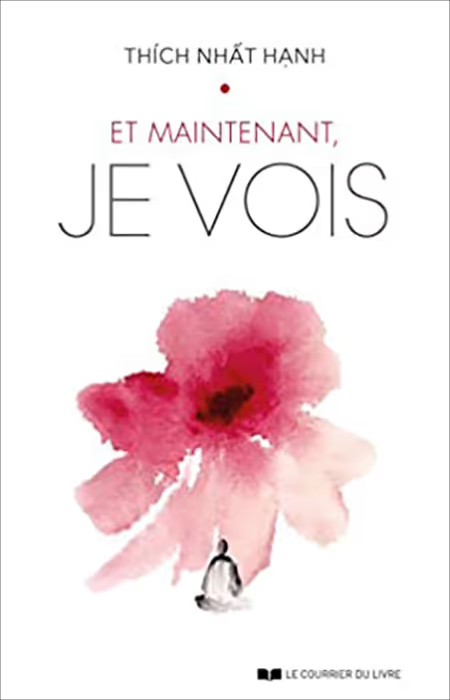
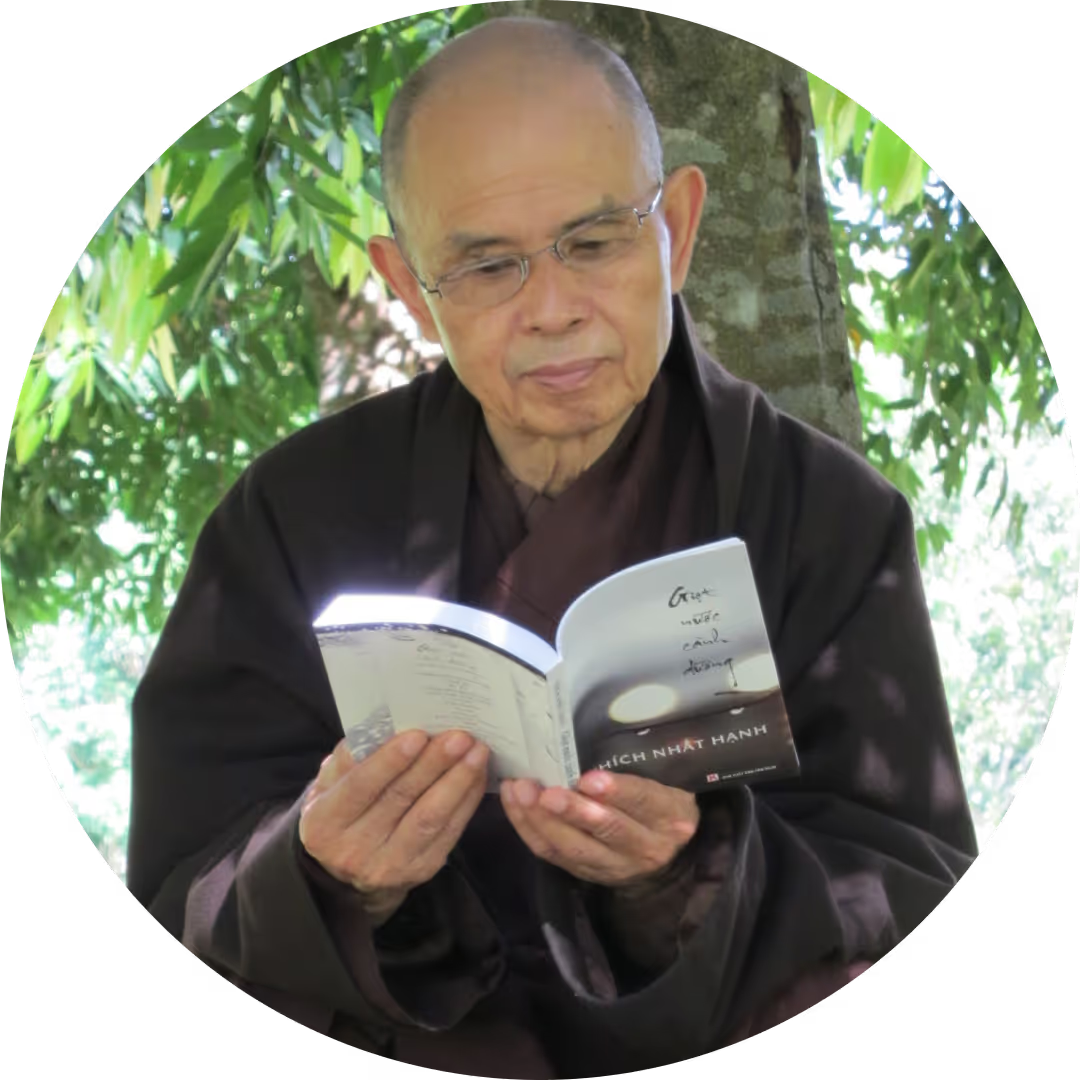
In the time of the Buddha, there were no written archives, teachings were passed down through oral traditions. About 454 years after the Buddha entered nirvana (circa the 1st century BC), disciples began to write down the Buddha’s teachings on palm leaves.
Lá bối means palm leaves.
Zen Master Thich Nhat Hanh, lovingly referred to as Thay by his students, carefully chose Lá Bối for the name of his publishing house. It was such a meaningful word for Thay, he also named his first practice center, Phương Bối (Fragrant Palm Leaves), founded in 1957 in the Dai Lao Forest, near the Montagnard village of B’su Danglu in the Central Highlands in Vietnam.
In 1962, Thay received a scholarship to study at Princeton University and Columbia University where he also lectured the following year in the United States. It was his first time outside of Vietnam, and those two years of studying, teaching, and practicing in a peaceful environment were a turning point in his life. For the first time, he was not in the midst of war, bombings, and an incessant state of urgency, Thay could really deepen his meditation practice, especially walking and sitting meditation, which gave rise to many profound visions.
After returning from the United States in 1964, Thay immediately founded three major institutions in Vietnam:
All of this happened within two years and with meager financial resources. Then, in 1966, Thay left once more for the United States to call for peace, and was forced into exile for the next 39 years by the government of Vietnam.
This is the story of how Lá Bối publishing house began with an unexpected act of generosity. In 1964, Dr. Hiệu’s wife offered Thay a significant financial gift: 20,000 VN Dongs. With the donation, Thay met with his close students and asked what they wanted to do with the money. Thay said that while they could simply buy books, it would be far more meaningful—and fun—to start their own publishing house. One of the first books they immediately published was Buddhism for Today. Before Lá Bối was closed in 1975 at the end of the Vietnam War, it had become one of the most important publishing houses in Vietnam.
After its closure, Thay sustained it in Paris on his own for the next decade, a period during which his most important books were written. By 1987, his students moved the publishing house to the United States and took charge of it until 2009.
The founding of Lá Bối was transformative. Founded in the midst of war in Vietnam and continuing into his life in exile in France, Thay could publish his writings and share his insights, when his books were banned in Vietnam.
Before Thay founded the Lá Bối publishing house, 12 of his books had already been published by different editors.
Out of 131 Thay’s books in Vietnamese, Lá Bối published 79 from 1964 to 2009. 46 of them remain untranslated; these are his most challenging works, focusing on history, the studies of consciousness (Buddhist psychology), and sutra teachings.
Throughout his life, Thay always encouraged his monastic students to write, reminding us that writing is a powerful way to transmit the practice very far. Through his disciples’ letters, Thay recognized those who had writing skills and he always encouraged them and guided them to develop those skills as Dharma tools.
Even today, as we live in an age of podcasts, social media, and countless digital platforms, surveys show us that the majority of people discover the wisdom of Thay’s teachings by reading a book.
During my home visit to Northern California last winter in 2024-2025, I had the opportunity to meet several of Thay’s long-time students who once helped run his publishing house there. Being in contact with his former students who once poured all their time and energy, day and night, to help our teacher spread the practice of mindfulness in the West since the very beginning, when few people knew about mindfulness, a question sparked in me: Why not bring new life to the Lá Bối’s legacy through a dedicated website?
When I shared the idea with them and other Thay’s students, the response was overwhelmingly positive. I kept the idea alive, and about half a year later I met a website developer who volunteered to build the site, along with a software-engineer who also joined the effort. Former staff of Lá Bối took care of administration. A donor and all the volunteers once again gave the project a boost — history repeating itself.
Every month, Lá Bối will release one of Thay’s books in the chronological order of publication, starting from his earliest book in 1950. A month later, we will host a book club to explain the historical context in which the book was written and allow all subscribers to share their understanding and practice. We will also have the chance to learn how the publishing house survived in Paris after the end of the Vietnam War in 1975, and how Thay continued publishing his books by himself. We will listen to former Lá Bối staff in the US share their experiences about what they did and how they worked over the years to help spread the practice of mindfulness.
All Lá Bối books are written in Vietnamese, but you’ll be able to enjoy their translations in four languages — English, French, Spanish, and Chinese — thanks to translation technology and the wonderful dedication of our volunteers, who lovingly transcribe the texts and carefully review each version. And who knows? This shared first attempt might inspire some of you to polish these early translations and help bring them to life in a future publication!
Lá Bối’s website will not only offer archival access to Thay’s ancient books that have been lost during the war or those that haven’t yet been translated into other languages, but will also offer video clips of Dharma talks, photographs, and music to shine light on the uploaded books.
All subscribers will also be able to access a forum with Plum Village monastics, where you can ask questions, respond to one another, and share your reflections on the Zen Master’s writings.
In the spirit of curiosity and openness, we will together enjoy exploration and study, discovering the evolution of our teacher’s practice and insights throughout his life.
And finally, it is through our own practice that we can best maintain and build this historic publishing house, bringing Engaged Buddhism into our lives, today and into the future.
